
HOME › Services › Rodent Control
Residential Rodent Control
Trapping alone buys you a few weeks. Our residential rodent removal takes out the rats and mice, then seals the entry points behind them. Free quotes.

Identifying Rat and Mice Activities
Rats and mice come indoors looking for food, shelter, and warmth. These are the three signs homeowners notice first.

Chewed-up wires
Rodent incisors never stop growing, so they gnaw constantly, and cable is a favorite target. Chewed insulation on a live wire in an attic is a real fire risk.

Droppings Indoors
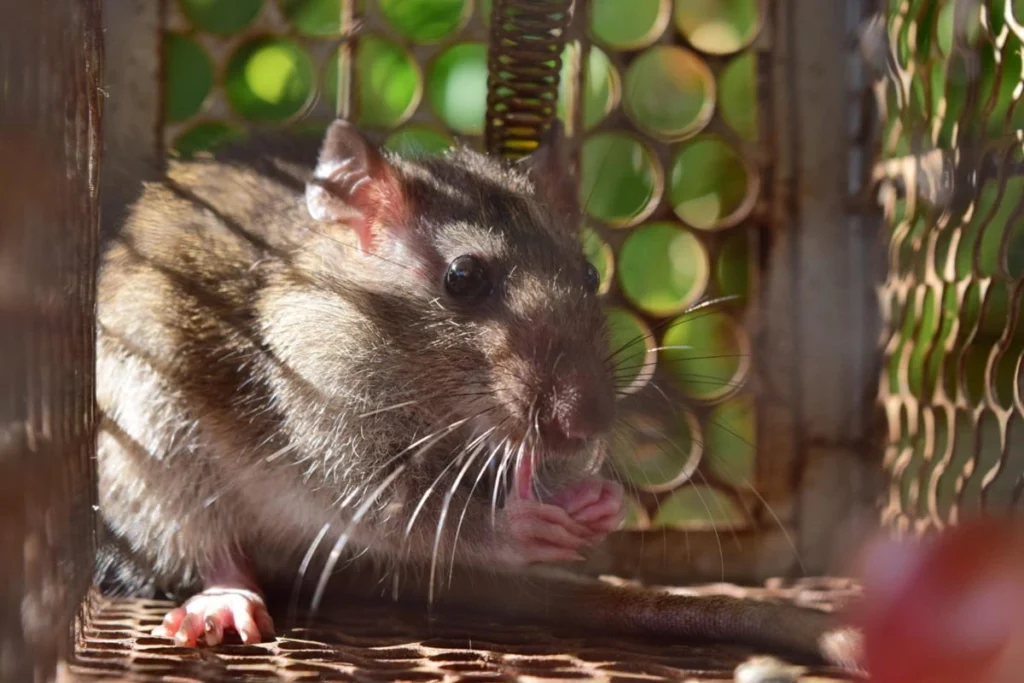
Droppings turn up behind the stove, under the sink, and along the top of a wall plate. Size tells you which species you are dealing with.

Noises After Dark
Scratching, gnawing, or running sounds in the ceiling once the house goes quiet. A dog or cat fixed on one spot in a wall tells you the same thing.
Rodent Control Solutions
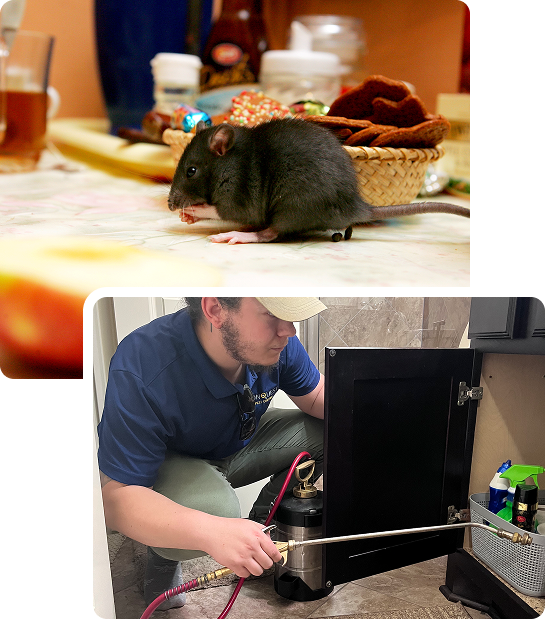
Baiting, trapping and exclusion. Three stages, and proper residential rat removal needs all three.

Baiting
Bait stations sit outside, never in the living space. They intercept rodents at the perimeter before they start looking for a way in, and every station is locked and tamper-resistant so it is safe around children and pets.

Trapping
Inside an occupied home, our residential rat control work uses traps rather than bait, so nothing dies inside a wall cavity. Traps go on active runways, and that placement is what decides whether a job takes days or weeks.

Exclusion
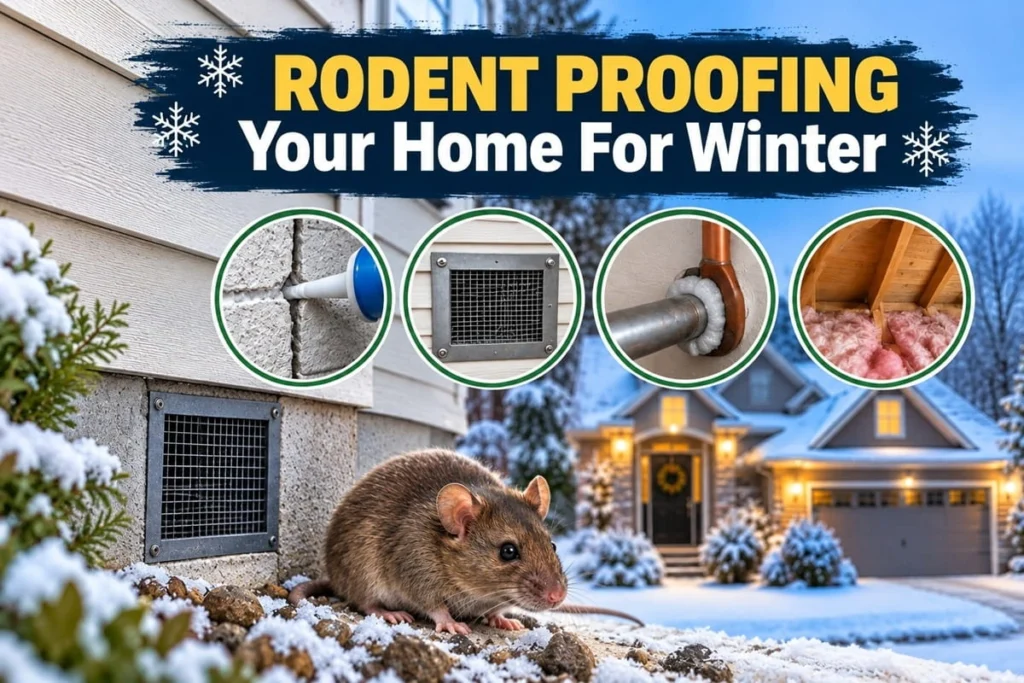
Weep holes, soffit gaps, roof-to-fascia joins, dryer vents, and gaps around pipework are sealed with steel mesh and hardware cloth. Rodents chew straight back through expanding foam, so we do not use it.
How Our Home Rodent Control Service Works
Four stages, every time, and we do not call it finished until the activity has stopped.
Step 1

Inspection
We check the attic, crawl space, garage, and full exterior, recording droppings, runways, and rub marks to work out how many there are, where they are living, and every point they are using to get in.
Step 2

Trapping and Removal
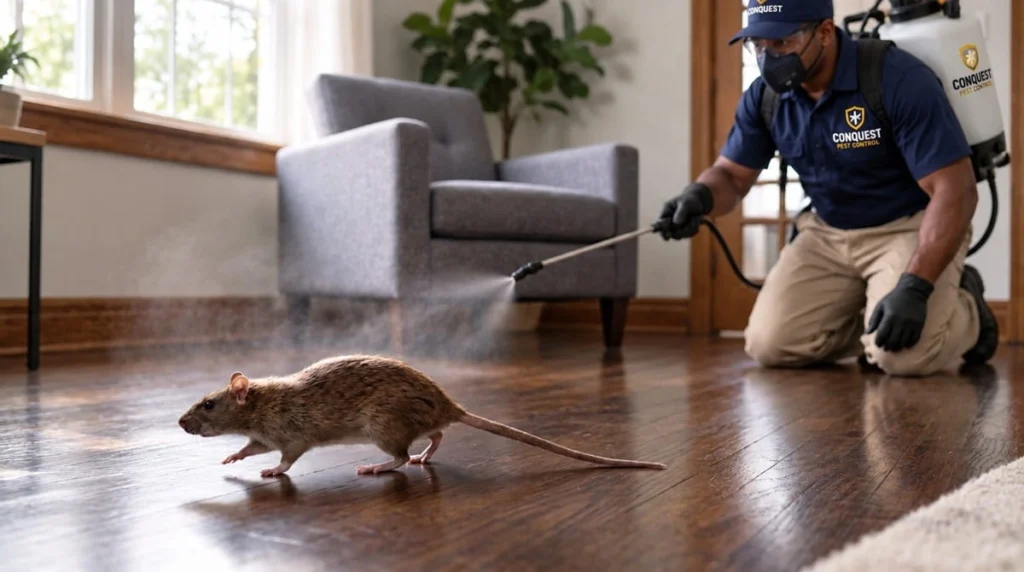
Home rodent removal starts in earnest. Traps go along active runways, and in an occupied home we favor trapping over bait so there is no risk of a rodent dying inside a wall cavity.
Step 3

Exclusion
Entry points are sealed with steel mesh and hardware cloth. This is the part that decides whether they come back.
Step 4

Follow-Up
We return to clear traps, check the seals have held, and confirm activity has stopped before closing the job.
Every home gets the full treatment cycle, no shortcuts and no half measures.
Why Homeowners Choose Conquest for Residential Rodent Control
Conquest Pest Services is a family-owned company, and rodent work has been part of what we do for more than twenty years. In that time the pattern has barely changed. Most people call after hearing something overhead at night, and most have already set a few traps of their own before they contact us. What separates a proper residential rodent exterminator from a trapping call is what happens after the last rodent is caught. Traps deal with the pest already inside. They do nothing about the gap those pests came through, which is why an infestation handled by trapping alone tends to be back within a season.
Our residential rodent control service runs the full cycle. We inspect, we trap, and we seal every active entry point with steel mesh and hardware cloth, and then we return and check the work has held. It is also why we recommend home rodent control on a schedule rather than as a one-off call. 97% of our customers stay with us year after year. Get a free estimate in minutes, with no obligation attached.
Time to Plan Pest Destruction
Describe the problem, and we will get it dealt with at the source.
By clicking “Submit” you agree to receive email/sms communications from us and confirm you have read and agree to our Terms of Use and Privacy Policy.
How to Get Rid of Rats and Mice Fast and Permanently
Locate All Entry Points
Check weep holes, soffit gaps, roof-to-fascia joins, dryer vents, and the points where plumbing and utility lines pass through the wall. A mouse gets through an opening the width of a pencil and does not need to look big to let a mouse inside.
Seal the Gaps
Seal entry holes with steel mesh, hardware cloth, or metal kick plates. Avoid using expanding foam or caulk by themselves. Rodents chew right through these soft materials within weeks, undoing your work.
Cut Off the Routes In
Trim tree limbs back about six feet from the roofline and move anything stacked against an exterior wall. Roof rats travel along branches and utility lines, so removing the bridge achieves more than treating the yard.
Remove Food and Water Sources
Store pet food and birdseed in airtight containers, remove fallen fruit and nuts from the yard, and keep trash in tightly covered bins. Wash these bins often, because food residue on the outside attracts rodents just as easily as an open lid.
Remove Hiding Places
Clear clutter, lift stored items off the floor and away from walls, and move anything boxed in cardboard into rigid containers. Pests use paper and cardboard to build nests, and stacks of boxes against walls give them safe shelter.
What else is bugging you?
Pick your pest and we will take it from there.

Bed Bug

Cockroach

Mosquito

Termite
LATEST IN RESIDENTIAL RODENT CONTROL
Expert guides and practical tips from our technicians to help you spot rodent problems early and understand the right solutions for your home.
Why Rodent Control in Pearland, TX, Is Important for Local Homes
Rodents often top the list of uninvited guests in our homes. Rodents such as rats and mice are dangerous pests that can cause severe property…Commercial Winter Pest Control: Challenges in Cypress & Fort Bend County, TX | Conquest Pest Control
Businesses in winter face serious pest control challenges as cold weather attracts pests indoors. When the temperature drops outside, rodents, cockroaches, and overwintering insects begin…Your Guide to Preparing for Pest Control Treatment
Unwanted pests like cockroaches, termites, and rodents can pose health risks, making pest control essential for maintaining a healthy, safe living environment. Pests can cause…































What Our Customers Say
Unedited feedback from our Google Business Profile.







Residential Rodent Control FAQs
Pests Do Not Wait. Neither Do We.
Tell us what is bugging you and get a free consultation and an estimate in minutes.
Rat control for homes, done properly from inspection through to exclusion.