The Complete Guide to Mosquito Prevention at Home
Mosquitoes are more than a nuisance, and mosquito prevention at home starts earlier than most people think. On the Gulf Coast the disease of greatest concern is West Nile virus, which the CDC lists as the leading cause of mosquito-borne disease in the contiguous United States. It usually arrives with mosquitoes that breed close to your home, often in standing water on or near your own property.
They mostly thrive in hot and humid weather. The life of mosquitoes consists of four stages: egg, larva, pupa, and adult, all of which require stagnant water. Standing water accumulates decaying organic matter, bacteria, and algae, which are the primary food source for mosquitoes.
Similarly, lush plants, shrubs, and tall grasses act as a barrier against wind, heavy rain, and direct sunlight, providing ideal shelter for these pests. So the job splits in two: remove the water where they breed and thin the shade where the adults rest through the day. If you want to get rid of mosquitoes, it is important to prevent them from getting into your home first. DIY methods can provide temporary relief, but professional mosquito control services offer lasting effects. This guide covers mosquito prevention at home from the first signs through to professional treatment.
What Are the Early Signs of Mosquito Infestation?
You can easily identify an increase in mosquito activity. However, you need to identify the active breeding spot to eliminate them. Here is what to look for:
- Swarms of Flying Insects: If you notice clusters of adult mosquitoes flying around shaded corners, dense garden areas, and under the roof of your porch, it is a sign of mosquito infestation.
- Larvae in Stagnant Water: Another sign is finding tiny, wormlike larvae swimming in standing water, such as in plant trays, bird baths, and outdoor drains.
- Multiple Bite Marks and Swollen Bumps: If you consistently wake up with itchy, swollen bumps on exposed areas of your skin, especially during the rainy season, it is a clear sign of mosquito infestation.
- Buzzing Sound: We all know this high-pitched, annoying buzzing sound near your ears. If you are consistently hearing this sound when sitting in an indoor area or during evening hours, it might be a sign of a mosquito infestation.
How Quickly Do Mosquitoes Breed?
In warm weather a mosquito goes from egg to biting adult in about a week. That is why tipping out standing water once a week works and tipping it out once a month does not. Anything holding water for much longer than a week is not a puddle; it is a nursery.
Simple Steps for Mosquito Prevention at Home
The following are some tips that can drastically reduce the mosquito infestation on your property and prevent them from getting inside your home.
-
Identification and Elimination of Breeding Grounds
Even a small amount of stagnant water can help mosquitoes complete their life cycle. The first thing you can do is inspect your property thoroughly to identify and remove the water-holding vessels. Check your outdoor spot for unused flower pots, drip trays, and children’s or pet toys that can accumulate water. Inspect outdoor equipment, storage bins, and the decorative fountain. Empty or dispose of any container where rainwater can collect. By taking this simple measure and weekly check, you can cut off the breeding cycle and protect your surrounding areas.
-
Physical Barriers and Insect Screens to Keep the Mosquitoes Out
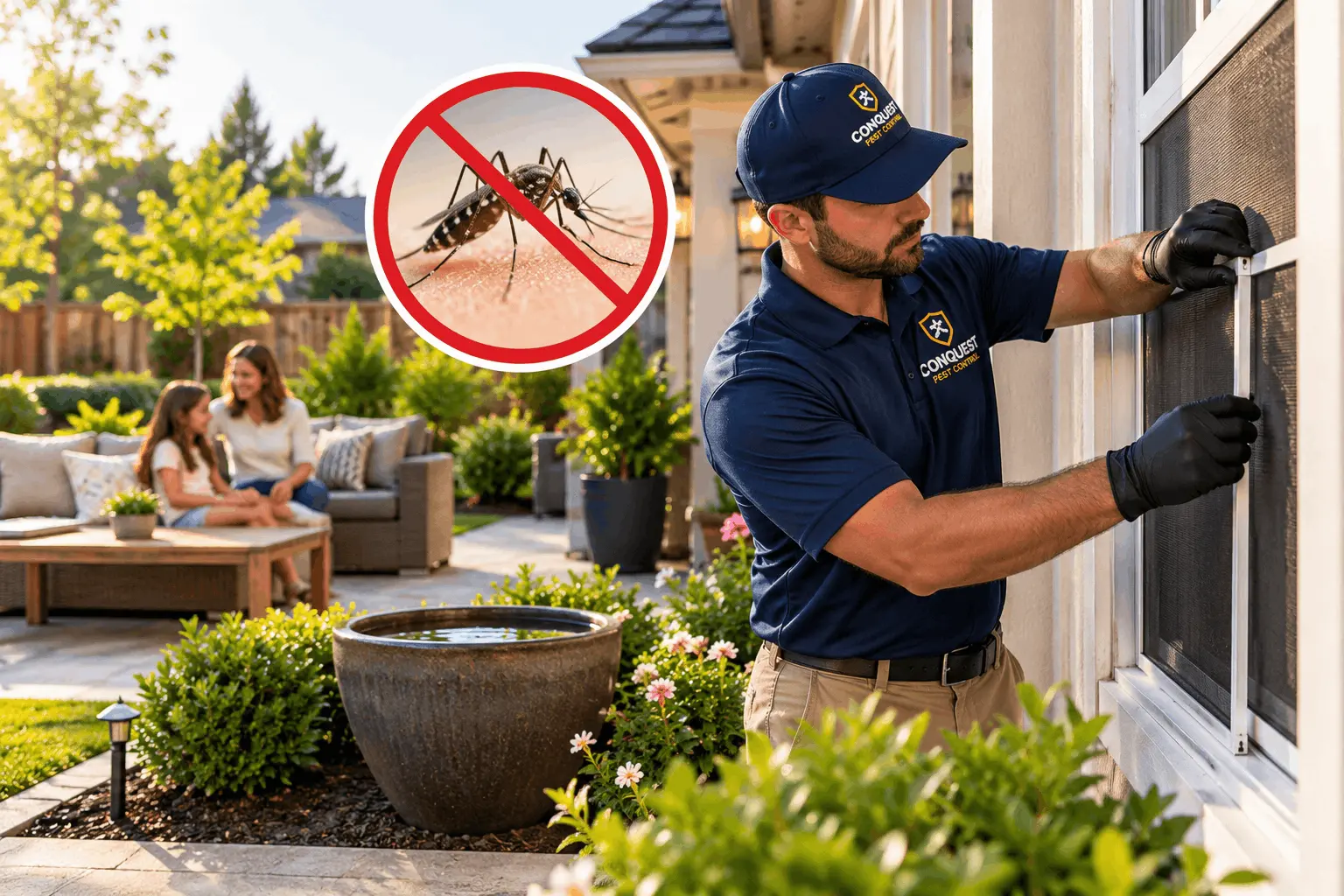
Physical barriers are the most effective method to keep mosquitoes from entering your home. Check your windows and doors and install tightly fitting mesh screens on the openings, including vents and chimneys. A heavy-duty, properly sealed screen can prevent mosquitoes from entering indoors. If you already have screens installed, check for any possible tears or gaps and repair or replace them if required. You can use mosquito nets in bedrooms and other indoor spaces for secondary protection while sleeping or resting.
-
Use Insect Sprays and Repellents Around the Home
Using targeted insect sprays and repellents can provide an additional layer of defense from mosquitoes. Sprays can eliminate the mosquitoes that somehow have entered your indoor space. To prevent these pests outdoors, homeowners can apply insecticides or natural repellent sprays containing ingredients like garlic, citric acid, or essential oils to foliage and to the shaded areas where mosquitoes find shelter. Be realistic about the natural options. They work, but it’s short-term, and they need reapplying after every rain. For personal protection, use an EPA-registered repellent, and if you would rather have the resting sites treated properly than keep reapplying sprays yourself, that is what professional residential pest control is for.
-
Limit Mosquitoes From Breeding in Your Yard and Garden
If your yard area is not properly managed, it can become a major breeding ground for mosquitoes. Adult mosquitoes breed and find their shelter in tall grasses and dense shrubs during the day. To prevent mosquito infestation, make sure to keep your lawn mowed and trim back overgrown grass and shade trees to prevent your outdoor space from being their favorite spot. Remove the excess leaves and yard debris. You can also use larvicides to break the breeding cycle in stagnant water before they hatch into adult mosquitoes, which is the same principle behind how we treat resting sites and breeding water on a scheduled visit.
-
Check Gutters, Downspouts, and the Water You Walk Past
A blocked gutter holds water along its whole length, sits in shade, and is close enough to the house that everything hatching there ends up on your patio. Clear the gutters at least twice a year and check that the downspouts run clear rather than pooling at the bottom.
Then walk the property and look at the things you stopped noticing. A tarp with a dip in it. A wheelbarrow was left upright. The saucer under the pot by the back door. A pool or spa cover that holds rainwater on top. A low spot in the lawn that stays damp for days after a storm. Birdbaths, pet bowls, and fountains need their water changed every few days rather than topped up, because a week is all it takes.
What Professional Treatment Can and Cannot Do
Anyone promising to eliminate every mosquito is overselling. Mosquitoes fly. They cross property lines, they come off drainage the whole neighborhood shares, and no treatment holds a permanent boundary around one yard.
What a treatment does is cut the active population back far enough that the yard is comfortable to use again, then keep it low. A treatment typically holds twenty-one to thirty days, and heavy rain or strong sun shortens that. Through the worst of the season, a monthly schedule holds better than waiting until you notice them again.
Why Choose Conquest Pest Services for Mosquito Prevention?
Mosquitoes can transmit diseases that affect the well-being of your family. Simple prevention methods can help reduce mosquito activity, but you need professional treatment and expertise for long-term protection. At Conquest Pest Services, we provide reliable mosquito solutions for residential properties.
Our experienced technicians provide detailed inspections to identify the breeding areas, resting spots, and the level of infestation. Based on our findings, we create customized plans that target adult mosquitoes while eliminating eggs and larvae.
We also minimize future breeding by identifying conditions that attract mosquitoes and recommend practical prevention measures. Tell us what you are dealing with and request a free estimate. We will inspect the property, tell you what we find, and give you a price before anything is booked.
Mosquito Prevention FAQs
How long does a mosquito treatment last?
Usually 3 to 4 weeks . Heavy rainfall washes away residue, while intense ultraviolet (UV) sunlight breaks down active ingredients; reapply every three to four weeks before the previous barrier completely wears off.
Will treatment get rid of every mosquito?
No. Treatments lower the number of mosquitoes. They fly across property lines from drainage and standing water you do not own. What a treatment does is cut the active population back far enough that the yard is comfortable to sit in.
Is mosquito treatment safe around children and pets?
Products are applied to insect resting sites away from where children and pets play and away from surfaces people touch. Keep children and pets off treated planting until it has dried, and your technician will tell you how long that takes on the day.
Serving homeowners across the cities we cover.